

Brillouin Microscopy Reveals Mechanical Properties of Human Skin
Scientists from the Max Planck Institute for the Science of Light, the Friedrich Alexander University Erlanger-Nüremberg (in Germany) and the MacMaster University (in Canada) have demonstrated a major advance in measuring the mechanical properties of human skin in vivo, using a motion‑corrected Brillouin microscopy system combined with optical coherence tomography (OCT).
The approach allows clinicians and researchers to non‑invasively map skin stiffness with cellular‑scale precision, an important step toward improved diagnosis of aging‑related changes and skin diseases.
For the Brillouin imaging setup the team used our CW Cobolt Flamenco at 660 nm.
 Go back to all publications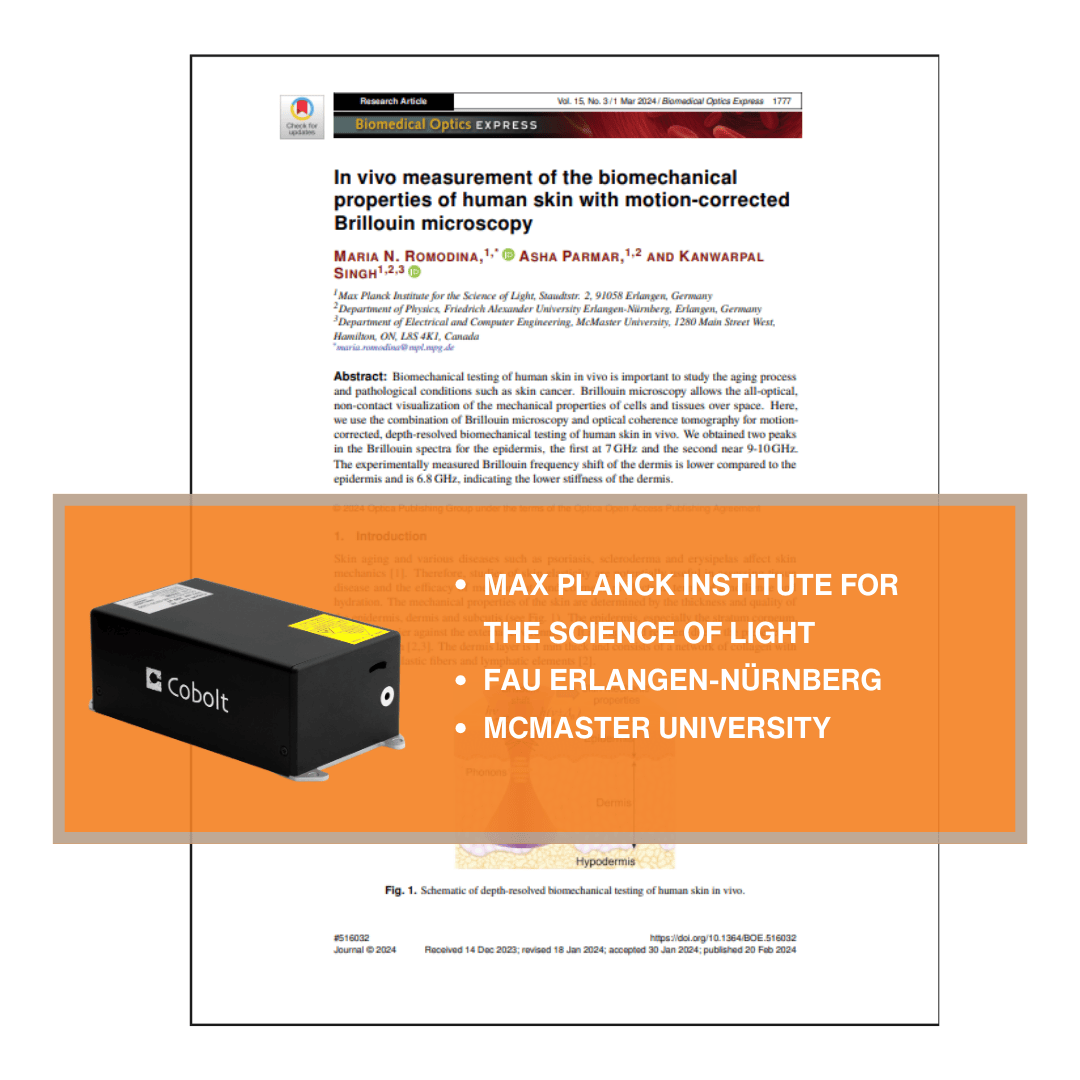
More resources
Looking for more in-depth information? Visit our Knowledge Bank page for detailed articles and insights on our products and technologies.